How to Overhead Press: Setup, Cues and Common Faults
By Anna · Updated November 2026 · 9 min read
The overhead press is the truest test of upper-body strength you can train standing up. It builds strong shoulders, a stable trunk and arms that carry real load overhead. It is also the lift where technique faults show up fastest: press a weight you cannot brace for, and your lower back arches to borrow strength it should not lend. Learn the setup first, add weight second.
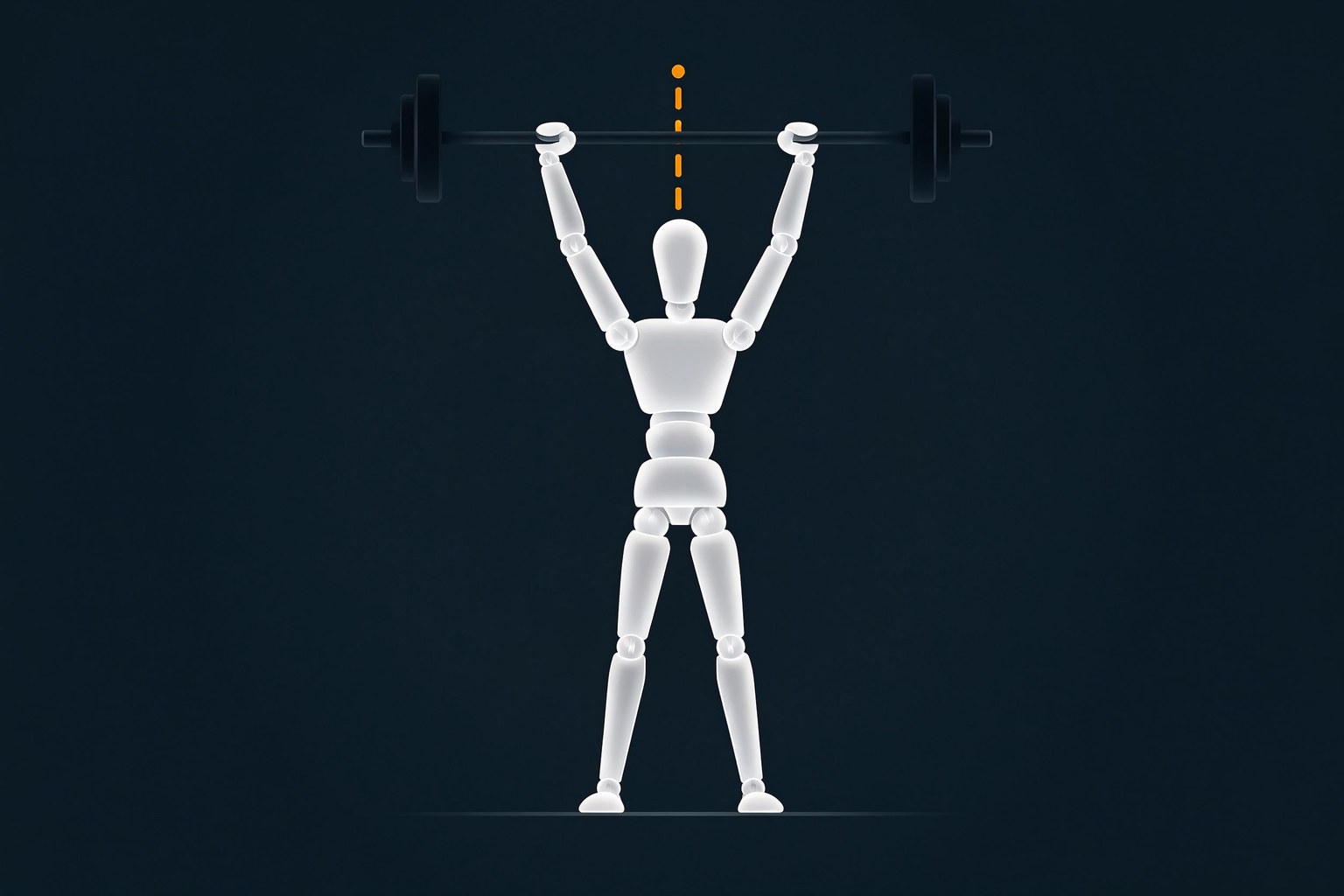
Why this lift punishes poor bracing
When the bar is above your head, your body has to stop itself from leaning backward under the load. The thing that does that job is a braced trunk, not an arched lower back. If your ribs flare upward and your belly pops out before you press, every rep becomes a back-and-forth balance act, and the shoulder and lower back take whatever the trunk failed to hold.
This is why the overhead press progresses more slowly than the bench press. Your trunk and your shoulder stabilisers have to catch up before the load can climb, and rushing that process is how people end up with shoulder or back niggles that stop training for weeks.
The setup checklist, in order
Run this every rep, especially when the weight starts to feel heavier. The press is decided in the two seconds before you push.
- 1. Feet under hips, weight on the whole foot. Stand tall with feet roughly hip-width, toes forward or very slightly out. Do not take a wide stance — the press is a vertical lift, and a narrow stable base keeps the trunk upright.
- 2. Bar on the front of the shoulders. Rest the bar across your front delts and upper chest, hands just outside shoulder width, elbows slightly in front of your torso. Your forearms should be vertical; the bar should sit over the middle of your forearm.
- 3. Tuck the ribs down. Pull your lower ribs toward your hips so your torso is a straight line from ankle to shoulder. A relaxed, flared ribcage is the position that leads to arching on the way up.
- 4. Big breath, brace the belly. Breathe into your stomach and tighten it as if someone were about to tap your abs. Hold that pressure through the whole rep; do not release it halfway up.
- 5. Push the head slightly back first. Make room for the bar to pass your chin by tucking the head a fraction, then let the bar travel past your face before you return the head to neutral.
- 6. Press in a slight diagonal, not straight through your nose. Push the bar up and a little back so it finishes over the mid-foot and shoulders. Arms finish straight, elbows locked, shoulders up but not shrugged toward the ears.
The five faults that strain shoulders and back
| What happens | Cause | Fix |
|---|---|---|
| Lower back arches hard | Ribs flared, core not braced, or the weight is beyond your strength | Re-brace and tuck the ribs before each rep; drop the load 10–15% |
| Bar travels around your face | Elbows started too far back, or you are pushing the bar forward first | Set elbows slightly in front of the torso; press up and back in one line |
| Shoulders shrug up at lockout | Trapezius doing the work, or the elbows never fully extend | Keep shoulders down, finish elbow extension, then settle the shoulder |
| Wrists bend backward | Grip too wide or elbows dropped behind the bar | Narrow the grip until forearms are vertical; keep the bar over the wrist |
| Head juts forward at the top | Bar path forced through the face instead of around it | Tuck the head a fraction at the start; return to neutral once the bar clears |
Lowering the bar with control
Bring the bar back down under control to the front of the shoulders rather than dropping it. Keep the brace as you lower; the eccentric part of the press is what builds the strength that makes the next rep easier. If you cannot keep the trunk upright on the way down, the working weight is too heavy for that session.
Where the overhead press fits in a routine
Train it once or twice a week, early in a session when you are fresh, because it needs a stable trunk and clean technique. In the muscle-building routine it pairs with pulling work on upper-body day; in the men's split it sits after the squat or bench so you are not pressing fatigued. If shoulder mobility feels tight, rehearse the bench press set-up first to groove the same shoulder position from a stable lying base, and check how your squat brace translates to a standing trunk.
Frequently asked questions
Why does my lower back hurt when I overhead press?
You are almost certainly arching to press the weight up. Brace the core, tuck the ribs down, and if the arch returns, the load is too heavy. A persistently sore back should be checked by a professional before you keep pressing.
Barbell or dumbbell press first?
Dumbbells first for most beginners. They let each arm work independently and are kinder on the shoulder while you learn the position. Move to the barbell once the pattern feels automatic.
How fast should the press weight climb?
Slowly. The overhead press lags behind your other lifts for the first year, and that is expected. Add small increments only while every rep keeps the ribs down and the trunk upright.
Written by
Anna
Yoga & Pilates instructor since 2010, Fitness Yoga Level 6, postnatal recovery specialist. Full credentials →