How to Deadlift: A Beginner's Guide to a Safe Setup
By Anna · Updated November 2026 · 9 min read
The deadlift is the exercise that gets people hurt most often — not because it is dangerous, but because it is the one lift where a small setup error multiplies under heavy load. A barbell squat with bad form is uncomfortable. A deadlift with bad form can put you in bed for a week. The good news is that the safe setup is simple, learnable, and identical every single rep.
The one thing that matters most: bar over midfoot
Every deadlift problem traces back to where the bar sits relative to your foot at the start. The bar must be over the middle of your foot — roughly one inch from your shins. If the bar is in front of that, the weight pulls you forward and your lower back has to fight a lever it cannot win. If the bar is behind it, you cannot get into a strong position at all.
Stand with your feet about hip-width apart, toes pointing forward or very slightly out. Look down. The bar should cut your foot in half. That is your start position, and it does not change between reps.
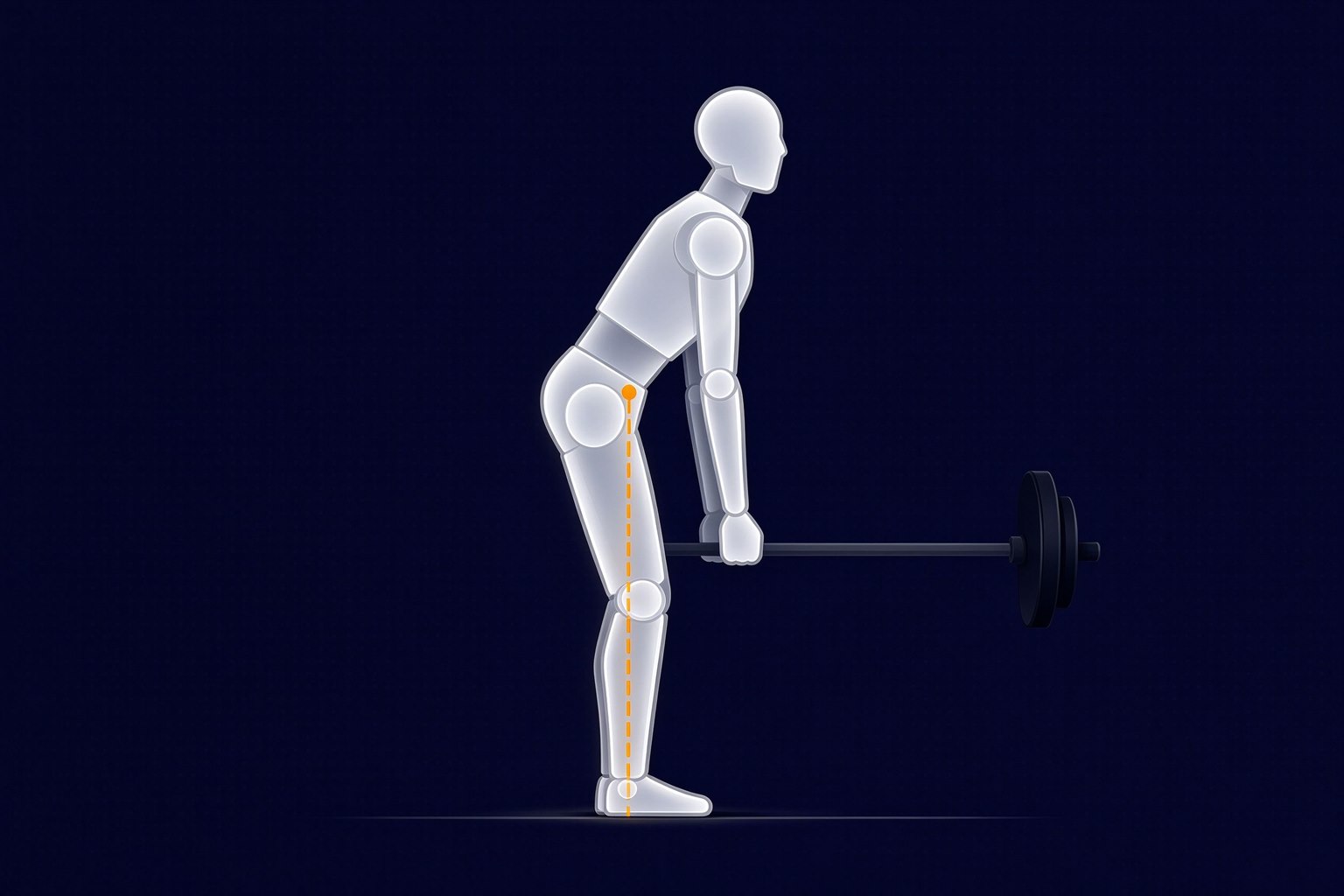
The setup checklist, in order
Run this every rep, even when you are tired. It takes eight seconds and it is the difference between a safe lift and a strained back.
- 1. Bar over midfoot, feet hip-width. Toes forward or slightly out. Do not look at the bar from above — look down at your own feet.
- 2. Hinge down and grip the bar. Push your hips back, bend your knees, and take the bar just outside your legs. Your arms hang straight — do not curl or pull with your arms at any point.
- 3. Shins to the bar. Bring your shins forward until they lightly touch the bar. This sets your hip height. Do not bend your knees further after this.
- 4. Chest up, lats tight. Lift your chest until your back is flat, and pull your shoulder blades down — imagine squeezing an orange in each armpit. This is what stops the bar drifting forward.
- 5. Take the slack out of the bar. Pull gently until you feel the bar go tight against the plates. You should hear a small click. Do not jerk — remove the gap first.
- 6. Big breath into your belly, brace. Same brace as the squat: belly out, abs tight, hold it through the whole rep.
- 7. Push the floor away. Think "leg press the floor" rather than "pull the bar up." Your hips and shoulders rise together.
The five mistakes that hurt lower backs
| What happens | Cause | Fix |
|---|---|---|
| Hips shoot up first | Bar too far forward, or you are trying to "pull" with your back instead of pushing the floor | Reset bar over midfoot; cue "chest and hips rise together" |
| Lower back rounds | Lost your brace, or the weight is beyond your current strength | Drop 20% of the load; re-brace before every rep |
| Bar drifts away from legs | Lats not engaged | Cue "armpits squeeze"; think of dragging the bar up your thighs |
| Cannot lock out at the top | Glutes not firing, or you are leaning back too far | Squeeze glutes at the top; stop when hips are fully extended, not leaning back |
| Knees cave in the setup | Stance too narrow, or hips too low | Widen stance slightly; raise hips by pushing shins to the bar |
Lowering the bar: the part everyone skips
Half of deadlift injuries happen on the way down, because people drop the bar and let their back round. Reverse the pull: push your hips back first, let the bar travel down your thighs, and only bend your knees once the bar passes them. Keep the same brace you had on the way up. If the weight is heavy enough that you cannot control the descent, it is too heavy for a working set.
Where deadlift fits in a routine
Once a week is enough for most people, and it belongs at the start of a session, not the end — it is the most systemically demanding lift you will do. In our five-day men's split it opens Saturday's lower session; in the hypertrophy plan it pairs with Romanian deadlifts on leg day. If you are new, run the beginner routine first and substitute a Romanian deadlift with light dumbbells until the hinge pattern is automatic.
Frequently asked questions
What is the most common deadlift mistake?
The bar starting in front of midfoot, which makes the hips shoot up before the bar leaves the floor. Fix the bar position and most other faults disappear.
Flat back or rounded back?
Flat. A rounded lower back under load is the main mechanism behind lower-back injury. If you cannot keep it flat, the weight is too heavy.
Can I deadlift with dumbbells?
Yes. Dumbbell deadlifts train the same hinge and are a good starting point at home, though you will outgrow the load quickly. Kettlebells work too.
Written by
Anna
Yoga & Pilates instructor since 2010, Fitness Yoga Level 6, postnatal recovery specialist. Full credentials →