A No-Equipment Home Workout Plan for Any Space
By Anna · Updated November 2026 · 9 min read
You do not need a gym, weights or a barbell to train consistently. What bodyweight work does need is a way to keep making exercises harder as they get easy — otherwise a session that once felt demanding turns into a few dozen easy reps that no longer change anything. This plan covers the four movement patterns your body needs, with a clear progression for each one and no gear beyond a little floor space.
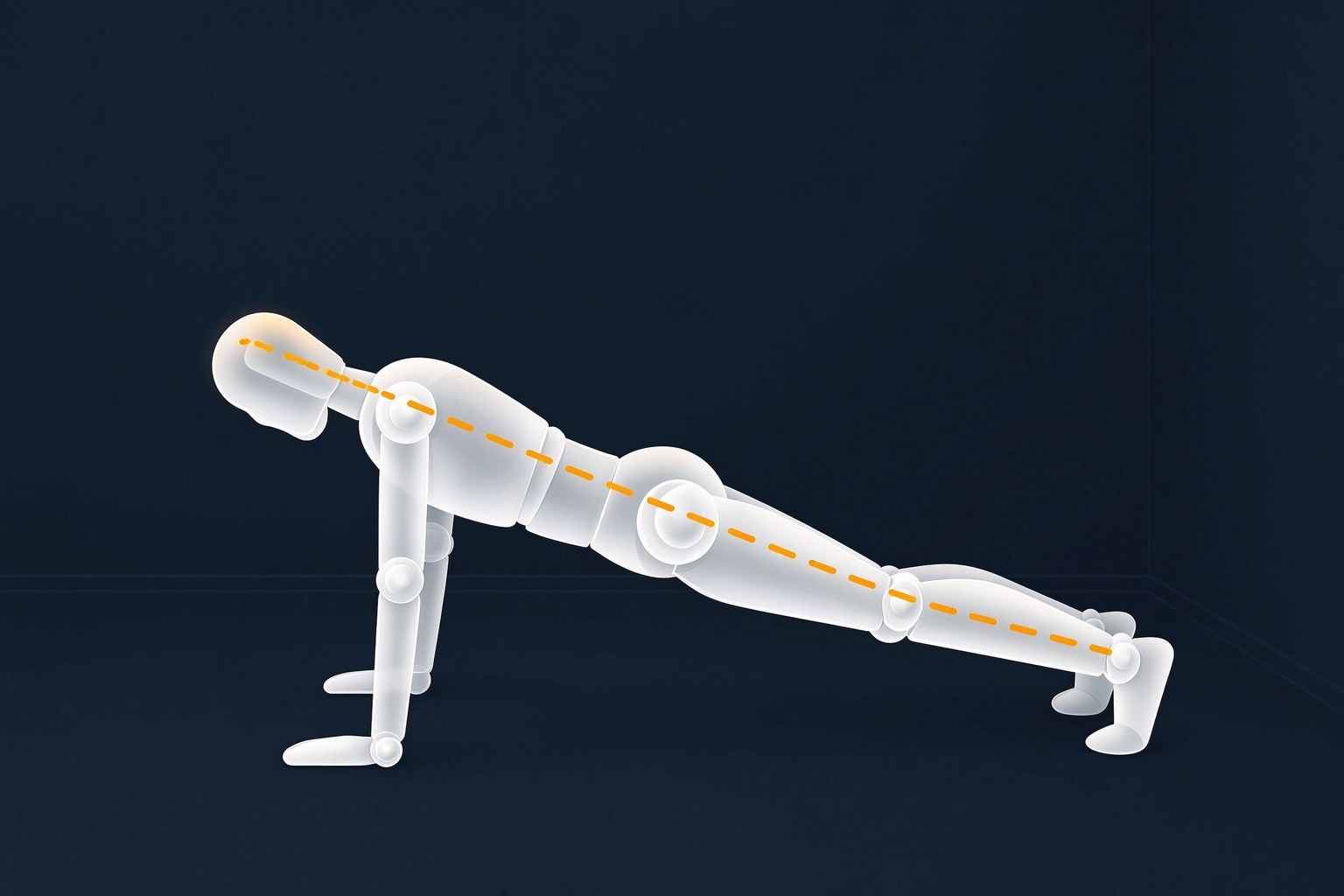
The principle: progress the exercise, not just the rep count
With weights, you add load. With bodyweight, you change the position of your body to make the same pattern harder: move to one leg, raise or lower your hands, slow the lowering phase, pause at the hardest point, or hold an isometric position. An easy set of twenty squats is a sign to step toward a split-squat variation, not to do fifty sloppy ones.
The four movement patterns and their progressions
| Pattern | Start here | Next step | Harder still |
|---|---|---|---|
| Lower body (squat) | Bodyweight squat, thighs to parallel | Reverse lunge, alternating legs | Bulgarian split squat, rear foot on a chair |
| Push | Kneeling push-up | Standard push-up | Narrow-hand push-up, then paused reps |
| Pull | Under-table row, hands gripping the edge | Lower the body angle to make the row steeper | Towel or strap anchor to a door frame for single-arm rows |
| Core | Dead bug, bird-dog | Plank hold, steady breathing | Plank shoulder taps or a slow plank walk-out |
Test any table or chair you use for pulling before loading your body onto it. It should not rock, slide or give way under your weight.
The three-session weekly plan
Run the same full-body session on Monday, Wednesday and Friday, with an easy walk or mobility work on the other days. Each session opens with a few minutes of gentle movement — arm circles, hip swings, bodyweight squats at half speed — before the working sets.
| Exercise | Sets × reps / hold | Focus |
|---|---|---|
| Squat variation | 3 × 10–15 | Control the descent; knees track over toes |
| Push-up variation | 3 × 8–12 | Body in one line; chest to the floor under control |
| Under-table row | 3 × 8–12 | Drive the elbows back; squeeze the shoulder blades |
| Reverse lunge | 2 × 8 per leg | Step back, keep the front knee tracking over the ankle |
| Core: dead bug or plank | 2 × 30–45 sec | Breathe steadily; keep the lower back settled |
How to progress over the weeks
When you can complete the top of the rep range with clean form on every set, move to the next variation in the table above. If even the start variation feels hard, stay there and make the reps slower: a three-second lowering phase adds more demand than rushing the same movement. Record the exercise, reps and any pause in a simple note each session, the same way you would track weights in a gym.
Mistakes that waste the session
- Skipping the pull pattern. Most home workouts are push-ups and squats only. Without rows, shoulders and upper backs drift out of balance, which is how neck and shoulder tension builds up.
- Training to failure every day. Bodyweight sessions feel easy to repeat, but muscles still need a day between hard work. Three focused sessions beat seven shallow ones.
- Only doing core work. Sit-ups and crunches do not substitute for the squat, push and row patterns that build overall strength.
- Rushing the reps. Fast, bouncy reps borrow momentum and reduce the stimulus. A controlled two-second descent on each rep is worth more than a quick set.
Where this plan fits
This is a standalone plan if you train only at home, and it pairs with our broader home workout routines and the beginner plan for people new to training. If you are carrying extra weight and starting out, the beginner overweight routine offers lower-impact starting points, and if time is tight, see the 30-minute session template for how to compress this into a short window.
Frequently asked questions
Can you build muscle with bodyweight training?
Yes, especially when you are new. Progressing to harder variations, slower reps and holds keeps the stimulus going. Once a movement is easy for high reps, the version has to change rather than the rep count alone.
What can I pull on without a bar?
A sturdy table or desk for under-table rows, or a towel anchored to a fixed door frame. Check the surface is stable before you put your body weight on it.
How often should I train at home?
Three sessions a week, with a day between them, is a solid start. Easy walking or mobility on the other days is enough; daily failure sessions slow recovery.
Written by
Anna
Yoga & Pilates instructor since 2010, Fitness Yoga Level 6, postnatal recovery specialist. Full credentials →